Scope and venue review
- Show goals, footprint, venue packet, and deadlines
- Graphics, furniture, AV, and booth hardware mix
- Budget clarity before production and freight move

About
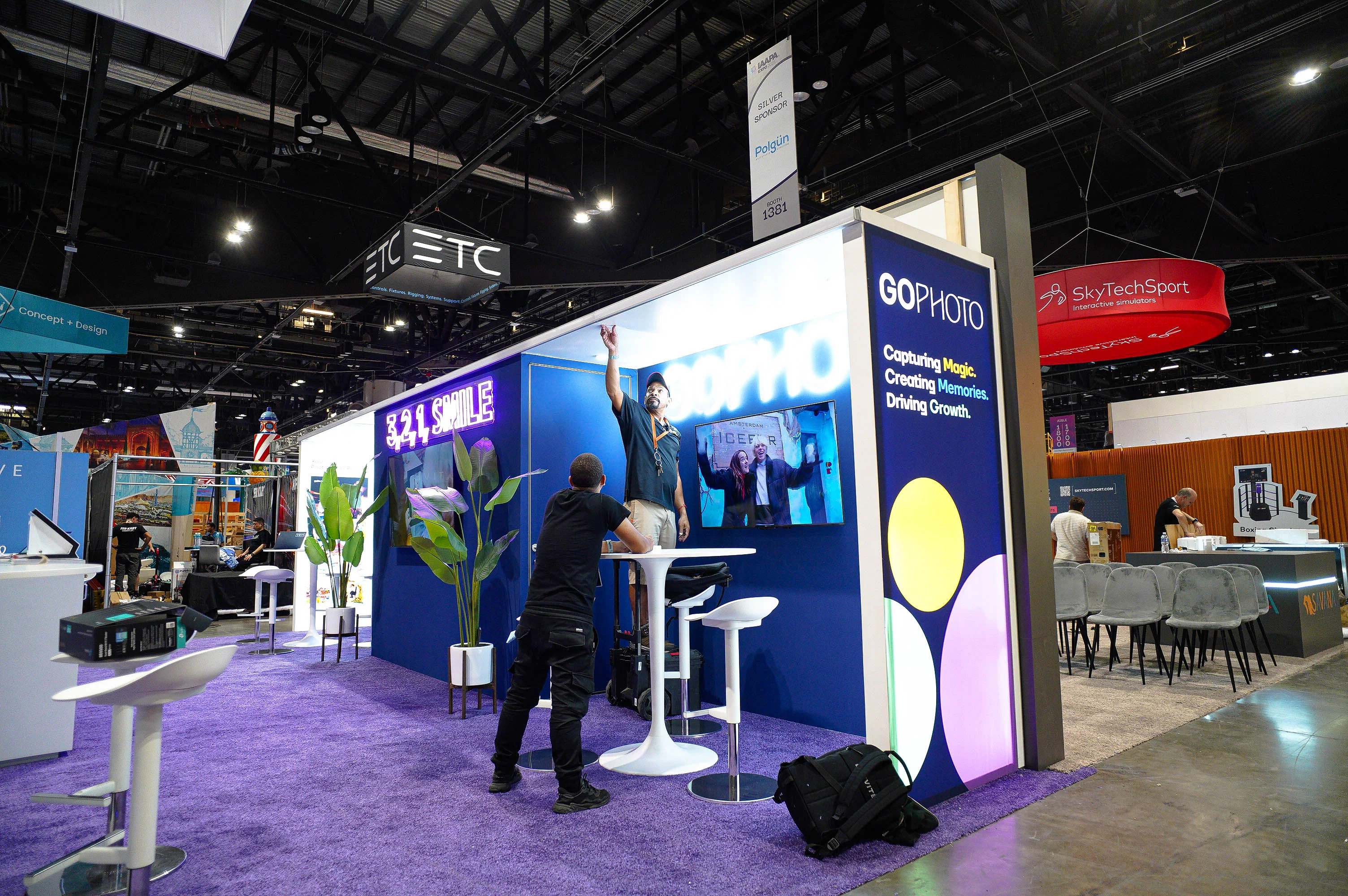
Trade show display rental work in Tampa is rarely won by the booth alone. The deadline, the venue rules, the loading path, the labor window, and the way the sales team actually uses the space matter just as much.
That is why the work is approached as one coordinated assignment instead of a stack of disconnected purchases. Booth hardware, graphics, freight, install, and close-out only feel simple on show week when they were scoped together at the beginning.
How the work is handled
Trade Show Display Rental of Tampa is built around the practical side of exhibit work: the booth has to read clearly, arrive in the right order, fit the venue, and stay usable once the room gets loud and the day gets long. That means the assignment starts with the event itself rather than with isolated line items. Show goals, footprint, venue packet, graphics, AV, furniture, labor, freight, and daily upkeep all belong in the same conversation because they all show up in the same room.
Tampa rewards that kind of planning. Convention-center dates, resort meetings, sponsor environments, fairgrounds programs, and nearby Gulf Coast events can all live inside one market while still creating very different build conditions. Treating those conditions seriously is usually what keeps the booth from looking improvised once the schedule tightens.
Most exhibitors do not need a speech about process. They need to know whether the job calls for a compact inline rental, a larger modular build, conference support, registration elements, show-site labor, or a broader package that keeps graphics, counters, furniture, and dismantle under one roof. Getting that clear early protects the schedule because the big decisions stop moving around every time a new stakeholder joins the thread.
That clarity also protects the people inside the client team. Marketing can focus on the message. Sales can focus on how the booth needs to work for live conversations. Operations can focus on deadlines, freight, and venue procedure. When each group knows what it owns, the exhibit becomes easier to approve and easier to defend as the date gets closer.
Rental does not lower the bar. It simply changes where discipline matters. Graphics still have to be approved on time. Hardware still has to be packed in a buildable order. Utility needs still have to be understood before move-in. Show-site supervision still matters when a room pushes back, power arrives late, or a small issue needs fixing before the first attendee walks through.
That execution bias is also what makes reuse worthwhile. A booth that is packed, labeled, refreshed, and re-deployed intelligently gives the exhibitor more value over time and makes later Tampa dates easier to plan. Reuse only feels efficient when the quality stays intact.
A good result is not just a booth that photographs well before the doors open. It is a booth that helps the team hold better conversations, present products clearly, protect storage and tech, and keep the environment from looking tired by the middle of the second day. Sometimes that means stronger aisle visibility. Sometimes it means a quieter interior for meetings, demos, or hospitality. In every case, the exhibit needs to support the sales effort rather than compete with it.
That is why operational details stay close to the work. Daily resets, hidden storage, charger access, monitor updates, literature flow, and a clear close-of-show plan all influence whether the booth still feels credible once the rush has passed. These are small things until they are not.
Local awareness matters because Tampa event work is spread across buildings that ask for very different kinds of support. A downtown convention hall, a hotel ballroom, a fairgrounds expo, and a waterfront sponsor event may all use the same exhibitor assets while putting completely different stress on access, labor, parking, staging, and load-out.
That perspective is useful when decisions are being made from several directions at once. Brand teams care about presence. Sales teams care about meetings and lead flow. Operations teams care about timing, risk, and cost. The better the room is understood, the easier it is to make recommendations that feel balanced instead of overbuilt in one direction and underprepared in another.